Jun 07, 2026
United We Row
Beyond Survival: How Rowing Helps Survivors Reclaim Strength, Confidence, and Joy
For many cancer survivors, recovery extends far beyond treatment. It is a journey of rebuilding strength, rediscovering confidence, and finding hope for what comes next. Across the globe, survivor rowing programs are helping women do exactly that—one stroke at a time.
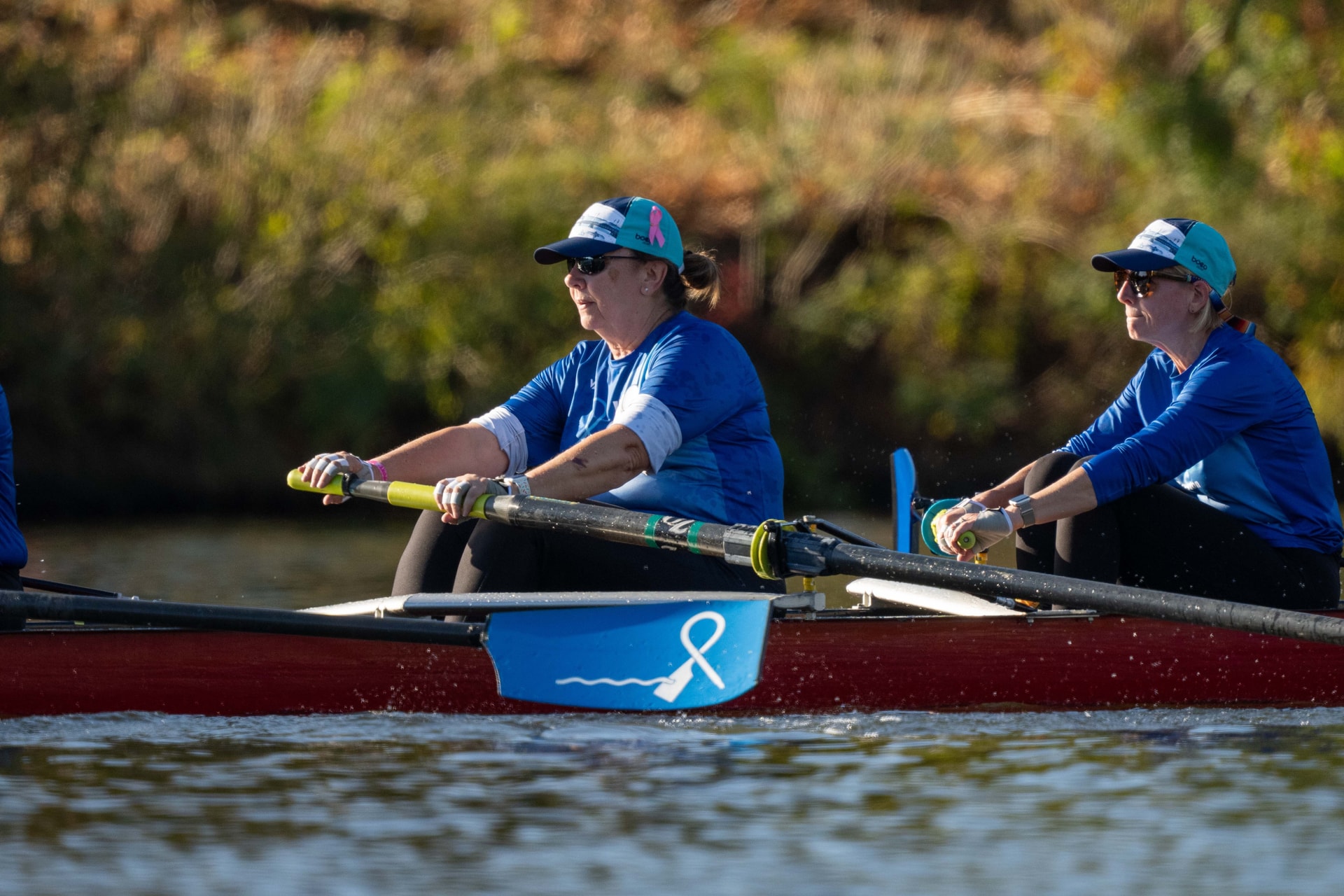
Through the Survivor Rowing Network (SRN), nearly 2,000 cancer survivors in more than 45 programs worldwide are finding community, healing, and empowerment through the sport of rowing.
Finding Strength in the Stroke
For Cicily Hajek of Tri State We Can Row, rowing reinforced two qualities that have guided her through survivorship: patience and persistence.
"We can do hard things," she says.
Diagnosed with breast cancer in 1985, Hajek remembers a time when survivors rarely spoke openly about their diagnosis. Years later, she discovered survivor rowing and found not only a sport but a community. In 2024, she fulfilled a dream by competing in the Head of the Charles Regatta.
"It was empowering to realize I was able to improve at a sport in my sixties and seventies," she says. "I have met wonderful people, gone to new places, and had incredible experiences."
A Future to Row Toward
When Leslie Ann Hunt was diagnosed with Stage 3 HR-positive breast cancer in 2021, her first thought wasn't about treatment—it was about rowing.
"I am so lucky this is happening at the end of the fall rowing season. I can be back on the water in spring."
Although recovery took longer than expected, rowing gave her something essential: a future to work toward.
Just four weeks after a double mastectomy, Hunt returned to the water. She rowed through radiation treatments and eventually competed in the inaugural Survivor Row at the Head of the Charles on the two-year anniversary of her diagnosis.
But what she remembers most is the support she received from her teammates.
"The day after I shared my diagnosis, the first casserole arrived. Then flowers. Muffins. Grocery deliveries. Hand-knit chemo hats in team colors."
For Hunt, rowing became a place where cancer did not define her.
"Because rowing gave me far more than exercise during recovery. It gave me a community that understood how precious these moments are. It gave me teammates who celebrated every milestone, from carrying a boat overhead again to crossing finish lines I once feared I would never reach. It reminded me that recovery is not only about surviving illness — it is also about reclaiming joy, connection, identity, and hope."
From Hospital Bed to Head of the Charles
For Lori Boersma of Saugatuck Survive-Oars, rowing represents a remarkable comeback.
After a second cancer diagnosis, months in the hospital, and two months in a coma caused by sepsis and septic shock, doctors doubted she would survive.
Following extensive rehabilitation, she discovered survivor rowing and found a new purpose.
Today, she has rowed in two Head of the Charles Regattas.
"Crossing that finish line and thinking there was a time I couldn't stand on my own, and now I had just rowed 4,700 meters! This was mind blowing, and still is every time I think of how far that body has come."
Now she works to introduce new survivors to the transformative power of rowing and the belief that survivors can accomplish far more than they ever imagined. Lori became a USRowing be a Level 2 certified coach and has begun to work with new survivors.
Rediscovering Resilience
For Addrienne Dorado, a childhood leukemia survivor and member of Row-SIST at River City Rowing Club, survivorship took on new meaning after a recent health scare.
After discovering a lump and undergoing testing for possible cancer, she found herself revisiting fears she thought she had left behind.
When the diagnosis ultimately came back negative, she paused to recognize something she had never fully appreciated before—her own resilience.
Although she is not yet cleared to return to the water, rowing continues to influence her recovery.
"It’s taught me how to stay present instead of getting caught up in the “what ifs,” and to just focus on what’s right in front of me. That’s been really important in recovery—taking things as they come rather than trying to figure everything out at once.
It’s also helped me rebuild trust in my body. After everything, that doesn’t come automatically, but rowing reminds me of what I’m capable of and helps me feel more confident in that again.
More than anything, it’s built resilience. It’s shown me that even on the harder days, I can still show up, keep going, and move forward."
A New Beginning
For Bridget McCrate Protus of the Central Ohio Rowing Program for Breast Cancer Survivors, rowing began with a flyer at a support group meeting.
She had never considered herself athletic, but she decided to attend a learn-to-row session.
"Nearly from the moment I sat in that pink eight boat, I knew rowing was exactly where I needed to be and the women on this team were exactly who I needed to know."
Since then, she has participated in major events including the Head of the Charles and the San Diego Crew Classic with Survivor Rowing Network composite crews.
Every season brings renewed excitement and gratitude.
"The feeling of pride and accomplishment is unmatched. Rowing was life-changing for me exactly when I needed that change."
Beyond the Finish Line
For Deb Smith of We Can Row Boston, participating in the 2024 Head of the Charles Survivor Row was a bucket-list achievement.
After years of watching from the sidelines, she finally took her place in a survivor crew.
"As we crossed the finish line, we all let out screams of delight, relief, and maybe a bit of pain. But we did it. I did it. Cancer left me with many scars. But participating in the HOCR left me with a lovely medal, wonderful memories and greater determination."
Only a month later, she began treatment for a second breast cancer diagnosis. The setback was devastating, but rowing once again became part of her recovery.
After treatment, she attended a rowing camp in Florida despite lingering fatigue and neuropathy.
"I fully expected to spend half my time in the hotel room," she recalls.
Instead, she completed every row.
"Completing all five rows gave me hope that the new season was possible."
More Than Exercise
The stories of these women share a common theme. Rowing is more than a sport. It is a source of strength, friendship, purpose, and healing.
Whether recovering from surgery, rebuilding confidence after treatment, or learning to trust their bodies again, survivors consistently describe rowing as a pathway forward.
The Survivor Rowing Network continues to grow around the world, helping cancer survivors discover what these athletes already know: recovery is not simply about surviving cancer.
It is about moving beyond it—with strength, community, and hope.
As many survivor rowers remind one another: We can do hard things.
For more information about the Survivor Rowing Network or to find a survivor rowing program, information is available here.